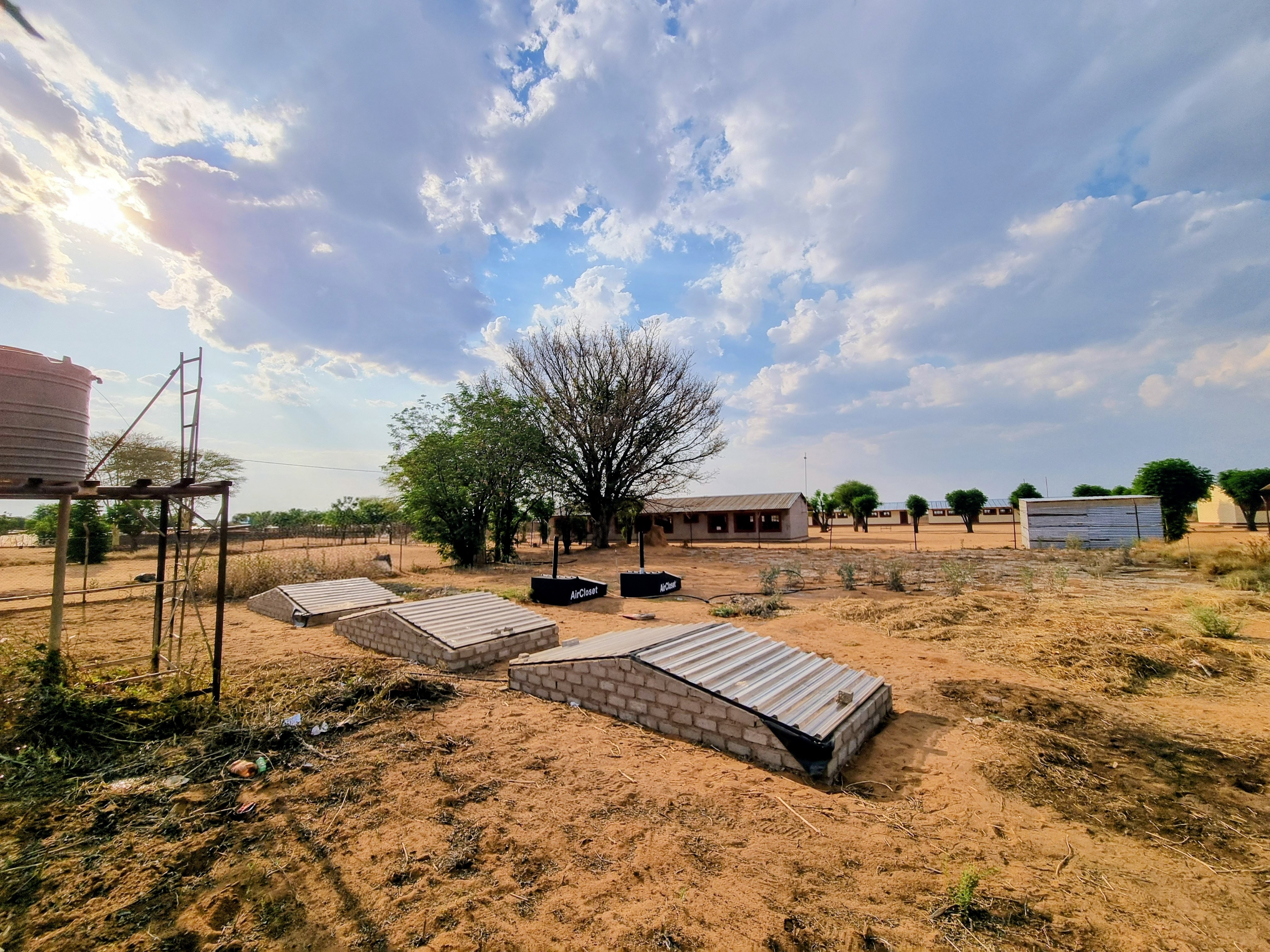
What is the AirCloset?
The AirCloset is a system that works with a urinal or urine-separating toilet to turn urine into a safe fertilizer using only the power of the sun.
01.
You pee as usual
The urine flows into a small storage tank or directly through a pipe into the AirCloset.
02.
Add NutriFiks
Urine is mixed with NutriFiks — a carefully designed blend of acids that keeps urine stable and safe. NutriFiks ingredients are naturally found in plants, food, and even in our own urine, but in very small amounts.
03.
Why add NutriFiks?
Fresh urine is rich in urea, one of the most widely used fertilisers in the world. But if urine is left untreated, germs grow and feed on urea, turning it into ammonia – a bad smelling gas. Adding NutriFiks stops those germs and prevents nutrients in urine from escaping into the air.
04.
AirCloset uses the sun
Urine is 95% water. The AirCloset works by capturing the warmth of the sun and the movement of air. Just like a solar stove cooks food without firewood, the AirCloset dries urine without electricity. The water is removed from urine as vapour, the same way clothes dry on the washing line or meat dries in the sun to make biltong.
05.
What is left?
When all the water has been evaporated, what remains is a dry powder that is safe to handle and store. This powder, which we call Granurin, contains 15–20% nitrogen, 5% potassium, 2% phosphorus, and many other naturally occuring micronutrients derived from urine.
06.
Using Granurin
Granurin is safe to store and easy to use. Keep it in a sealed bag so it does not take back moisture from the air. You can use it straight away as a fertiliser, spreading it on fields or gardens. Granurin gives plants the same nutrients as shop-bought fertiliser, but it’s made locally in your community.
The AirCloset Team

Simha
Prithvi is a Researcher at the Swedish University of Agricultural Sciences, specialising in resource-oriented sanitation systems. His work focuses on developing technologies that recover nutrients from domestic wastewater and return them to agriculture. He has over a decade of experience in urine recycling and leading projects that link sanitation, farming, and sustainability.
Role: Leads research and development on urine chemistry and process engineering

Gert is a Lecturer in architecture at the Namibia University of Science and Technology, specialising in sustainable design and construction sciences. He has extensive experience in designing and building water-sensitive and climate-appropriate technologies in Southern Africa. He has also been active in projects that link architecture, engineering, and community development.
Role: Leads the design and implementation of the AirCloset system.

Anastasija is a Research Engineer at the Swedish University of Agricultural Sciences, where she co-developed the AirCloset’s urine acidification and drying technology. She specialises in environmental communication and social aspects of sanitation innovations. Her work explores how communities perceive new technologies, what drives or hinders acceptance, and how solutions fit local contexts.
Role: Leads community engagement and communication for the AirCloset.