Questions about using the AirCloset
What if my toilet is not connected to the AirCloset?
You can still use the system by collecting urine in a jerry can or bucket, adding Nutrifiks, and then pouring it into the AirCloset. Make sure to acidify the urine by adding Nutrifiks in the container right away. The treated urine can be poured into the AirCloset for drying.
Can the AirCloset handle all the urine from my family?
Yes. On average, one AirCloset can dry about 6–8 litres of urine per day under good sun. Since each person produces about 1–1.5 litres per day, one AirCloset is usually enough for a household of 4–6 people. Larger families may need more than one unit.
The tray inside the AirCloset can hold up to 100 litres of urine, even if that amount cannot be fully evaporated in a single day. This means it has enough storage capacity to keep working without overflowing.
Can I build an AirCloset myself?
Yes, it is possible to replicate the AirCloset. If you are interested in building one, ask people who already have an AirCloset or reach out to us. We can connect you with local metal workers who can help. If you are a metal worker yourself, we are happy to train you and share the design of the system.
How do I maintain my AirCloset?
Cleaning: Dust on the polycarbonate sheet can block sunlight, so just wash or wipe it with a wet cloth now and then. This keeps the sun reaching the urine for faster drying.
Line the tray: At the start of each new cycle, place a plastic sheet inside the tray. When the urine has dried, you can lift the same sheet out with the Granurin and put it straight into a bag. This keeps things clean and hygienic.
What if it rains?
The AirCloset is built to protect the urine as it dries, so rainwater will not get inside. However, the AirCloset does not work as well in very humid weather. When the air is already full of moisture, the evaporation rate becomes slower.
Does the AirCloset smell bad?
Adding Nutrifiks makes the urine smell much less than untreated urine, because it stops the strong ammonia smell from forming. Once the water is removed from urine, the final product (Granurin) has a faint smell.
Questions about treating urine by acidification
Why add Nutrifiks? Can I skip it?
No. Acidifying urine with NutriFiks is very important. Without it, germs quickly break down the urea in urine into ammonia gas. This not only creates a bad smell, but also makes valuable nitrogen nutrients escape into the air. By stopping this process, NutriFiks keeps the nutrients locked in the urine until it dries, so they can be fully recovered as fertiliser.
What is NutriFiks?
NutriFiks is the special blend of acids we add to urine to keep it fresh and safe. It is made from acids that are already used worldwide in food, farming, and industry. Some of them are naturally present in plants and even in the food we eat every day.
⚠️Important: Always follow safety precautions: Nutrifiks ingredients are mild and can be handled with a spoon or with gloves, but must be kept away from skin and eyes, and stored safely out of reach of children.
When and how do I add NutriFiks?
NutriFiks must always be there from the very first day. It should already be in the jerry can, storage tank, or in the tray inside the AirCloset before the urine starts flowing in. The amount of NutriFiks depends on how much urine is collected. As a guide, use about 3–4 grams for every litre of urine (that’s about one teaspoon per litre).
⚠️Important: After you harvest the finished Granurin from the AirCloset, you must add NutriFiks again to the empty tray or container. This way, the next urine that comes in the AirCloset will be treated right from the start.
How much does the NutriFiks cost?
NutriFiks is affordable. It costs about 50 N$ per kilogram. Since the AirCloset needs only about 3 grams per litre of urine, one person will need around 1.5 kg of NutriFiks per year. That means the cost is about 75 N$ per person per year, or around 300 N$ for a family of four.
Questions about Granurin
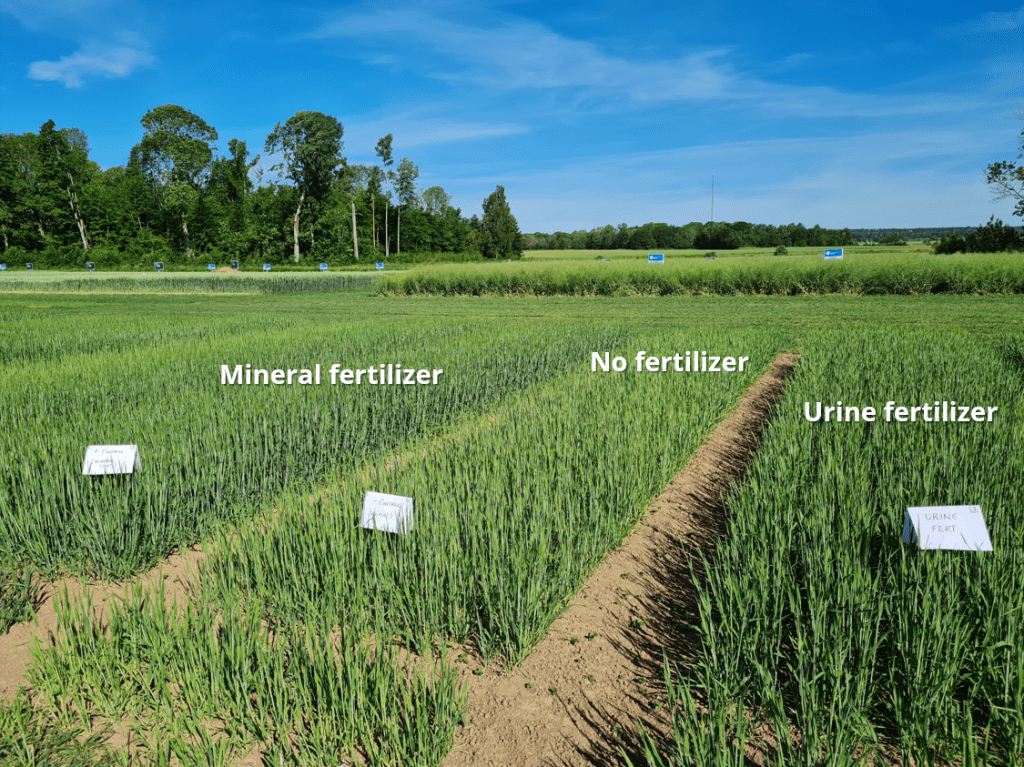
Can Granurin replace chemical fertiliser?
Yes. Granurin has the same plant-essential nutrients — nitrogen, phosphorus, and potassium. The difference is that it is made locally from safely recycled urine instead of being imported.
How long does it take to make Granurin?
It depends on the sun, wind, and how much urine is collected. In hot, sunny weather it is faster, and in cooler or cloudy weather it takes longer. On average, we expect about 4–5 kg of urine to evaporate per day for every square metre of drying area. The AirCloset has a tray of about 1.5 m², which means it can normally dry 6–8 litres of urine per day under good conditions.
What should I do with my Granurin?
That’s up to you. You can store it safely, use it directly on your crops, share it with neighbours, or even sell it. Granurin is a valuable fertiliser, and keeping it dry means it will last a long time.
How long can I store Granurin?
Granurin can be stored for months or even years if kept in a sealed bag or bucket so it does not take back moisture from the air.
How much Granurin should I add to my crops?
We worked with the Namibian Agricultural Board (NAB) fertiliser guide to estimate how much nitrogen each crop needs for maximum yield. Since Granurin contains about 20% nitrogen, we calculated how much Granurin is required to match those needs. The table below shows examples for the top 20 crops grown in Namibia, both for one hectare of land and for a small 10 m² garden plot.
| Crop | Granurin for farming (kg/ha) | Granurin for garden plots (kg/10 m²) |
| Groundnuts | 150 | 1.5 |
| Millet (Mahangu) | 300 | 3.0 |
| Sorghum | 450 | 4.5 |
| Sunflower | 500 | 5.0 |
| Swiss Chard (Spinach) | 500 | 5.0 |
| Lettuce | 565 | 5.6 |
| Onion | 570 | 5.7 |
| Beetroot | 580 | 5.8 |
| Maize | 600 | 6.0 |
| Broccoli | 640 | 6.4 |
| Potato | 805 | 8.0 |
| Pumpkins | 915 | 9.2 |
| Carrot | 1,000 | 10.0 |
| Cucumber | 1,015 | 10.1 |
| Squash | 1,065 | 10.6 |
| Sweet Pepper | 1,145 | 11.4 |
| Sweet Melon | 1,220 | 12.2 |
| Tomato | 1,500 | 15.0 |
| Watermelons | 1,800 | 18.0 |
| Cabbage | 1,870 | 18.7 |
⚠️ Important: These numbers show the maximum amount needed for the highest crop yield (according to the Namibian Agronomic Board guidelines). You can always use less Granurin depending on your soil, water, and crop goals. Even smaller amounts will boost growth compared to using nothing at all. If Granurin is used in combination with other fertilisers like cow manure and compost, you should add less.
Is it safe to use Granurin?
Yes. The AirCloset system uses several barriers to make sure Granurin is safe. First, the NutriFiks acid blend stops germs from growing in fresh urine. Then, heat from the sun and drying remove the moisture that microbes need to survive. This “multi-barrier” approach is the same principle recommended by the World Health Organization (WHO) for safe reuse of sanitation products. Together, these barriers ensure that Granurin can be handled and used safely as a fertiliser.
Are pharmaceutical residues in Granurin a risk?
Human urine can contain very small traces of medicines (pharmaceuticals) that people take. To check if this is a problem, urine-based fertilisers have been tested in Sweden and across the EU. The results are reassuring: while small amounts of pharmaceuticals can be detected in Granurin, the levels are extremely low and far below international safety limits.
Field trials back this up. In a 2025 Swedish study, 40 different pharmaceuticals were monitored through the entire crop cycle. Only seven were detected in the fertiliser itself (at very low levels), and none were found in the soil, water, or food crops after use.
Does Granurin contain heavy metals?
Granurin contains only extremely low concentrations of heavy metals and much lower than in animal manure, which is one of the most common fertilisers worldwide. This is because most heavy metals leave the human body through faeces, not urine. Compared to other fertilisers, urine-based products like Granurin are a much cleaner nutrient source.
Can I touch or carry Granurin with my hands?
Granurin is generally safe to handle, but it is slightly acidic even when dry. Just like with shop-bought chemical fertilisers, it is best not to touch it directly. Always use a scoop or wear gloves if possible. Wash your hands thoroughly after handling and avoid touching your face.
.
If you’d like know more, check out our “Science behind the AirCloset” page.
If you can’t find answers to your questions, please email us at TheAirCloset@gmail.com and we will get back to you soon
